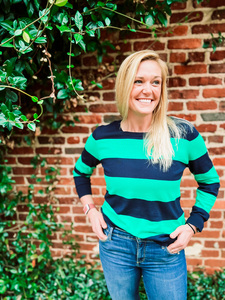
Anna Beilman

APC, NCC

About

Whether you are struggling with anxiety, trauma, or addiction, I can offer you a safe place to heal and grow. Looking into therapy is a brave first step in taking control of your life, and no matter what you are going through, I’ll meet you with compassion and respect. I believe my holistic approach to treating the mind, body, and soul—something I am very passionate about—can help you discover your best self.
I believe the ability to form close attachments and maintain satisfying relationships is at the core of a fulfilling life. That’s why I often work through a cognitive behavioral/emotional attachment lens, utilizing the therapeutic relationship to foster trust and connection. And because trauma is often at the root of many people’s pain, I’m also trained in EMDR.
My mission is to help you feel safe so you can tell your story, heal past emotional wounds, and find relief in the present. I have experience in various mental health settings, including residential, partial hospitalization, and individual therapy. As a trauma-informed therapist, I love working with adults dealing with anxiety, addiction, and trauma.

Whether you are struggling with anxiety, trauma, or addiction, I can offer you a safe place to heal and grow. Looking into therapy is a brave first step in taking control of your life, and no matter what you are going through, I’ll meet you with compassion and respect. I believe my holistic approach to treating the mind, body, and soul—something I am very passionate about—can help you discover your best self.
I believe the ability to form close attachments and maintain satisfying relationships is at the core of a fulfilling life. That’s why I often work through a cognitive behavioral/emotional attachment lens, utilizing the therapeutic relationship to foster trust and connection. And because trauma is often at the root of many people’s pain, I’m also trained in EMDR.
My mission is to help you feel safe so you can tell your story, heal past emotional wounds, and find relief in the present. I have experience in various mental health settings, including residential, partial hospitalization, and individual therapy. As a trauma-informed therapist, I love working with adults dealing with anxiety, addiction, and trauma.

Mindy Pierce

LPC

About

Mindy Pierce is a Licensed Professional Counselor (LPC) in private practice with GROW Counseling. She received her MA in Counseling Psychology from Indiana Wesleyan University and her BA from Asbury University.

Her clinical experience includes working with men’s and women’s issues; various relationship issues; pornography and infidelity; substance and process addictions; depression; anxiety; grief; PTSD; personality disorders; parenting stress; survivors of sexual, physical and emotional abuse, complex trauma, secondary trauma, commercial sexual exploitation and human trafficking; and those providing services for survivors (first responders, attorneys, therapists, and case workers). She is also trained and experienced in EMDR (eye movement desensitization reprocessing).

Mindy has led short-term teams and/or facilitated counseling seminars in Mexico, Uganda, Ukraine, and Sri Lanka. She and her husband spent 18 months living in Sri Lanka and working for a post-tsunami recovery project, where she began her involvement in anti-human trafficking work. Upon returning to the United States, she has worked in a private, residential setting and as a therapist in private practice.

A strong commitment to supporting first responders grew from experiences related to her husband’s years spent in law enforcement. Mindy possesses a deep appreciation for the unique challenges faced by those working on the front lines of law enforcement, fire and rescue, and emergency medical services – understanding the risk of secondary traumatization, addiction, burnout, isolation, and distress in personal relationships.

In 2016, after 14 years of witnessing the restorative impact of healthy, life-giving relationships and the traumatic impact of brokenness around issues related to connection, sex and intimacy, Mindy created STRONGERconnection|cards™, a conversation tool designed for proactively building relationships and preventing disconnection. You can learn more at STRONGERconnectioncards.com.

She and her husband live in the Atlanta area and have three children.

Mindy Pierce is a Licensed Professional Counselor (LPC) in private practice with GROW Counseling. She received her MA in Counseling Psychology from Indiana Wesleyan University and her BA from Asbury University.

Her clinical experience includes working with men’s and women’s issues; various relationship issues; pornography and infidelity; substance and process addictions; depression; anxiety; grief; PTSD; personality disorders; parenting stress; survivors of sexual, physical and emotional abuse, complex trauma, secondary trauma, commercial sexual exploitation and human trafficking; and those providing services for survivors (first responders, attorneys, therapists, and case workers). She is also trained and experienced in EMDR (eye movement desensitization reprocessing).

Mindy has led short-term teams and/or facilitated counseling seminars in Mexico, Uganda, Ukraine, and Sri Lanka. She and her husband spent 18 months living in Sri Lanka and working for a post-tsunami recovery project, where she began her involvement in anti-human trafficking work. Upon returning to the United States, she has worked in a private, residential setting and as a therapist in private practice.

A strong commitment to supporting first responders grew from experiences related to her husband’s years spent in law enforcement. Mindy possesses a deep appreciation for the unique challenges faced by those working on the front lines of law enforcement, fire and rescue, and emergency medical services – understanding the risk of secondary traumatization, addiction, burnout, isolation, and distress in personal relationships.

In 2016, after 14 years of witnessing the restorative impact of healthy, life-giving relationships and the traumatic impact of brokenness around issues related to connection, sex and intimacy, Mindy created STRONGERconnection|cards™, a conversation tool designed for proactively building relationships and preventing disconnection. You can learn more at STRONGERconnectioncards.com.

She and her husband live in the Atlanta area and have three children.

Courtney Salter

Counseling

About

You want to keep moving on with your life, but something is in the way. You may feel stuck, unmotivated, depressed, anxious, scared, and so much more. Life can be so challenging, and it isn't fair that you don't get instructions. At GROW, we understand that life can throw some unexpected curveballs that you were never prepared to handle. We want to help equip you with the tools to manage the challenges and wounds life can bring to move towards healing.

Courtney Salter loves helping people move forward. She is passionate about the potential that you have in your life, and works diligently to become a safe place to find and develop the tools within yourself and heal past wounds. Courtney earned her Master's Degree in Clinical Mental Health Counseling from Liberty University. She is a Licensed Professional Counselor, a Nationally Certified Counselor, and has extensive training in Dialectical Behavior Therapy (DBT). Courtney has worked in a psychiatric hospital with a range of disorders in the inpatient and outpatient units. Her experience extends to working with adults, teens, women, trauma, anxiety, addiction, depression, mood disorders, psychotic disorders, boundaries, communication, career, codependency, and relationships.

You are not broken in need of fixing; you may be healing and in need of care. Caring for yourself and your emotional/mental health is often a difficult thing to do. Yet unattended, the wounds and destructive coping mechanisms tear away the chance of healthy relationships, life-giving work, daily functioning, and effective parenting.

As your therapist, Courtney is determined to help you find your place in the healing process. You may wonder if you need counseling or if it will make a difference. Here at GROW, we have seen things get better. We are passionate about the potential that you have in your life. Life happens, but together we can find the next steps forward.

You want to keep moving on with your life, but something is in the way. You may feel stuck, unmotivated, depressed, anxious, scared, and so much more. Life can be so challenging, and it isn't fair that you don't get instructions. At GROW, we understand that life can throw some unexpected curveballs that you were never prepared to handle. We want to help equip you with the tools to manage the challenges and wounds life can bring to move towards healing.

Courtney Salter loves helping people move forward. She is passionate about the potential that you have in your life, and works diligently to become a safe place to find and develop the tools within yourself and heal past wounds. Courtney earned her Master's Degree in Clinical Mental Health Counseling from Liberty University. She is a Licensed Professional Counselor, a Nationally Certified Counselor, and has extensive training in Dialectical Behavior Therapy (DBT). Courtney has worked in a psychiatric hospital with a range of disorders in the inpatient and outpatient units. Her experience extends to working with adults, teens, women, trauma, anxiety, addiction, depression, mood disorders, psychotic disorders, boundaries, communication, career, codependency, and relationships.

You are not broken in need of fixing; you may be healing and in need of care. Caring for yourself and your emotional/mental health is often a difficult thing to do. Yet unattended, the wounds and destructive coping mechanisms tear away the chance of healthy relationships, life-giving work, daily functioning, and effective parenting.

As your therapist, Courtney is determined to help you find your place in the healing process. You may wonder if you need counseling or if it will make a difference. Here at GROW, we have seen things get better. We are passionate about the potential that you have in your life. Life happens, but together we can find the next steps forward.

Natalie Delgado

Associate Professional Counselor

About

Life can get overwhelming sometimes, and everyone has an opinion on how you should manage it. No matter what you’re dealing with, someone always suggests a quick fix— anxiety: “just calm down;” depression: “just be happy;” or disordered eating: “just eat.” The reality is, if it were that simple, we would all be perfect people and never struggle with anything in our entire lives. That’s just not human nature. So if that’s not the answer, how do we grow and change? How do we resolve the deepest, most wounded parts of ourselves?

There’s a quote by Christine Langley-Obaugh that I love, which says, “We repeat what we don’t repair.” We have to sit with those uncomfortable parts of ourselves—our anxiety, depression, disordered eating, grief—and figure out when and why it showed up. What is it trying to tell us about ourselves and our experience?

That’s what the therapeutic space is for. We put other pieces of our lives on hold for an hour, to sit and listen and process. From there, we can establish a different way for the brain and body to communicate with one another; a way that allows for expression without overwhelm. It’s a process that can take some time, but it is oh so worth it.

Life can get overwhelming sometimes, and everyone has an opinion on how you should manage it. No matter what you’re dealing with, someone always suggests a quick fix— anxiety: “just calm down;” depression: “just be happy;” or disordered eating: “just eat.” The reality is, if it were that simple, we would all be perfect people and never struggle with anything in our entire lives. That’s just not human nature. So if that’s not the answer, how do we grow and change? How do we resolve the deepest, most wounded parts of ourselves?

There’s a quote by Christine Langley-Obaugh that I love, which says, “We repeat what we don’t repair.” We have to sit with those uncomfortable parts of ourselves—our anxiety, depression, disordered eating, grief—and figure out when and why it showed up. What is it trying to tell us about ourselves and our experience?

That’s what the therapeutic space is for. We put other pieces of our lives on hold for an hour, to sit and listen and process. From there, we can establish a different way for the brain and body to communicate with one another; a way that allows for expression without overwhelm. It’s a process that can take some time, but it is oh so worth it.

Emily Fogleman

LCMHCA

About

Emily's passion for mental health began when she was just a child who saw how much counseling helped those in her family. Since then, her passion has only grown for helping others respond to life and its challenges. Emily believes in the importance of building a strong relationship with her clients, understanding how their identities impact their lives, and ensuring that she is always learning and growing as a person and counselor.

From her experiences in an on-campus clinic and a hospital support center, Emily has developed an approach to counseling that combines Cognitive- Behavioral Therapy, Acceptance and Commitment Therapy, and Person Centered Therapy. While everyone has different therapeutic needs, Emily tends to draw mostly from these approaches. Emily's professional interests include grief and loss, anxiety, body image concerns, stress management, and life transitions.

Emily's passion for mental health began when she was just a child who saw how much counseling helped those in her family. Since then, her passion has only grown for helping others respond to life and its challenges. Emily believes in the importance of building a strong relationship with her clients, understanding how their identities impact their lives, and ensuring that she is always learning and growing as a person and counselor.

From her experiences in an on-campus clinic and a hospital support center, Emily has developed an approach to counseling that combines Cognitive- Behavioral Therapy, Acceptance and Commitment Therapy, and Person Centered Therapy. While everyone has different therapeutic needs, Emily tends to draw mostly from these approaches. Emily's professional interests include grief and loss, anxiety, body image concerns, stress management, and life transitions.