Melanie Ross

Associate Professional Counselor

About

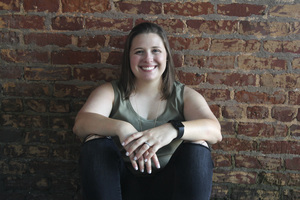
Melanie is an Associate Professional Counselor. She completed her Bachelors in Photojournalism through the University of Georgia. While completing her BA she discovered that what she most enjoyed about Photojournalism was getting to know people, and to help them tell their stories. Realizing her passion to help people to experience and tell their story well, led her to complete her Masters in Clinical Mental Health Counseling through Denver Seminary.

While completing her master’s she worked in a college setting counseling young adults dealing with anxiety, depression, and relational issues. After moving back to Georgia, she worked extensively with adults managing a range of mental health problems. She is passionate about working with teens, young adults, and individuals on issues of grief and loss, life transitions, career concerns, and relationship issues. Additionally, she enjoys helping couples rediscover joy in their marriage.

She seeks to create a warm and supportive environment where her clients feel heard and valued as they develop skills and process emotions to face life’s challenges. Melanie helps her clients pursue their goals through a holistic approach, using a variety of treatment methods that take into consideration a client’s physical, relational, emotional, and spiritual wellbeing.

In her spare time, Melanie enjoys spending time with her family, enjoying the outdoors, reading, and baking. She is a member of the LPCA of Georgia.

Melanie is an Associate Professional Counselor. She completed her Bachelors in Photojournalism through the University of Georgia. While completing her BA she discovered that what she most enjoyed about Photojournalism was getting to know people, and to help them tell their stories. Realizing her passion to help people to experience and tell their story well, led her to complete her Masters in Clinical Mental Health Counseling through Denver Seminary.

While completing her master’s she worked in a college setting counseling young adults dealing with anxiety, depression, and relational issues. After moving back to Georgia, she worked extensively with adults managing a range of mental health problems. She is passionate about working with teens, young adults, and individuals on issues of grief and loss, life transitions, career concerns, and relationship issues. Additionally, she enjoys helping couples rediscover joy in their marriage.

She seeks to create a warm and supportive environment where her clients feel heard and valued as they develop skills and process emotions to face life’s challenges. Melanie helps her clients pursue their goals through a holistic approach, using a variety of treatment methods that take into consideration a client’s physical, relational, emotional, and spiritual wellbeing.

In her spare time, Melanie enjoys spending time with her family, enjoying the outdoors, reading, and baking. She is a member of the LPCA of Georgia.

Bruce Borkosky

psychologist

About

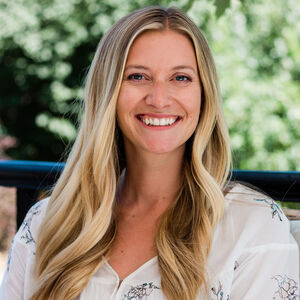
Hi, thanks for reading my Bio! I've been a psychologist now for 30 years. Over that time, I've helped more than 10,000 people. This is my 3rd career - I started as a Domino's Pizza manager, then a computer programmer for IBM. I became a psychologist after seeing my own psychologist during a difficult divorce. I learned so much from that experience that I knew it was right for me - so I went back to school. I've also completed 90% of a post doctoral certificate in neuropsychology.

I find that most people I work with are interested in one of two kinds of therapy. First, some people are interested in problem solving / solution focused therapy - finding solutions to life's many problems. I use brain science and the design of human beings to develop creative shortcuts to these problems. I've created my own names for them, such as the 'what else' technique, or reverse psychologizing yourself, or the 3 P's of grieving, or the 'outside the box' technique.

Other people want to understand themselves at a deep level. Perhaps they find themselves making the same mistakes in life. Or they wonder 'how did I get here?' The want to understand their personality structure and to make deep, long lasting changes - to become, not necessarily happier, but more successful and satisfied with life. During this process, I describe what I consider to be 'the ultimate in mental health.'

And now you know ... The rest of the story!

Hi, thanks for reading my Bio! I've been a psychologist now for 30 years. Over that time, I've helped more than 10,000 people. This is my 3rd career - I started as a Domino's Pizza manager, then a computer programmer for IBM. I became a psychologist after seeing my own psychologist during a difficult divorce. I learned so much from that experience that I knew it was right for me - so I went back to school. I've also completed 90% of a post doctoral certificate in neuropsychology.

I find that most people I work with are interested in one of two kinds of therapy. First, some people are interested in problem solving / solution focused therapy - finding solutions to life's many problems. I use brain science and the design of human beings to develop creative shortcuts to these problems. I've created my own names for them, such as the 'what else' technique, or reverse psychologizing yourself, or the 3 P's of grieving, or the 'outside the box' technique.

Other people want to understand themselves at a deep level. Perhaps they find themselves making the same mistakes in life. Or they wonder 'how did I get here?' The want to understand their personality structure and to make deep, long lasting changes - to become, not necessarily happier, but more successful and satisfied with life. During this process, I describe what I consider to be 'the ultimate in mental health.'

And now you know ... The rest of the story!

Jessica Lamar, Psy D, Lmhc, Lpc

LMHC

About

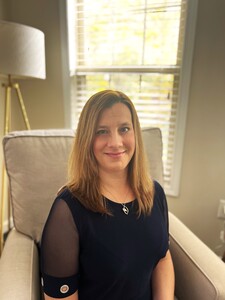
Throughout my career I have worked in forensic settings, community mental health, and private practice. I have experience working with serious mental health, sex addiction, trauma, betrayal, and grief. I am a licensed mental health therapist in the State of Washington. I earned a doctorate Degree in Clinical Psychology from Argosy University in 2018.

Currently, I work with adults who are facing death and non-death losses. Those who are trying to navigate the complexity of relationships and the grief process. I believe we all experience change and loss by virtue of being in this world and in relationships. Transition, loss, and the experience of grief will affect every person through various moment in life. I strive to understand each person’s unique experience with these transitions. At times, these changes and losses are unexpected and can throw us off track or render us feeling hopeless. I have a keen interest in how we construct meaning life, especially in the wake of loss and transition.
I enjoy working with people seeking ways to adapt, thrive, and create meaning within themselves, while coping with losses including death, loss of relationships, illness, and many other life transitions and/or ambiguous losses.

My primary goal in the therapeutic process is to actively assist you in reaching a better understanding of the underlying conflicts and meaning around your situation by helping you gain some objective distance around your concern in relation to your larger context. Self-awareness alone has positive effects. I believe change is possible through this kind of understanding and acceptance of oneself.

Throughout my career I have worked in forensic settings, community mental health, and private practice. I have experience working with serious mental health, sex addiction, trauma, betrayal, and grief. I am a licensed mental health therapist in the State of Washington. I earned a doctorate Degree in Clinical Psychology from Argosy University in 2018.

Currently, I work with adults who are facing death and non-death losses. Those who are trying to navigate the complexity of relationships and the grief process. I believe we all experience change and loss by virtue of being in this world and in relationships. Transition, loss, and the experience of grief will affect every person through various moment in life. I strive to understand each person’s unique experience with these transitions. At times, these changes and losses are unexpected and can throw us off track or render us feeling hopeless. I have a keen interest in how we construct meaning life, especially in the wake of loss and transition.
I enjoy working with people seeking ways to adapt, thrive, and create meaning within themselves, while coping with losses including death, loss of relationships, illness, and many other life transitions and/or ambiguous losses.

My primary goal in the therapeutic process is to actively assist you in reaching a better understanding of the underlying conflicts and meaning around your situation by helping you gain some objective distance around your concern in relation to your larger context. Self-awareness alone has positive effects. I believe change is possible through this kind of understanding and acceptance of oneself.

Taylor Ulrey

Licensed Marriage and Family Therapist

About

I have been supporting parents in every job or role I’ve had in adulthood whether I knew it at the time or not. My clinical work began working with teenagers in the inpatient setting. I noticed that there would be times where patients would become stable while in the hospital and then we would discharge them, only for them to return a short time later. I realized we needed to be working with the family as a whole. Then I began working with younger children, thinking if I intercepted my clients at a younger age, I could potentially prevent the struggles I saw on the inpatient unit. I slowly worked my way down in age, working in the infant and early childhood realm in mental health care. One day, I had a lightbulb moment. I noticed a trend in all of these settings: the most important and impactful work is done with parents. Most mental health difficulties in children (and even many adults!) can be traced back to early childhood. Those experiences either tend to help or hinder our roles as parents.

I have been supporting parents in every job or role I’ve had in adulthood whether I knew it at the time or not. My clinical work began working with teenagers in the inpatient setting. I noticed that there would be times where patients would become stable while in the hospital and then we would discharge them, only for them to return a short time later. I realized we needed to be working with the family as a whole. Then I began working with younger children, thinking if I intercepted my clients at a younger age, I could potentially prevent the struggles I saw on the inpatient unit. I slowly worked my way down in age, working in the infant and early childhood realm in mental health care. One day, I had a lightbulb moment. I noticed a trend in all of these settings: the most important and impactful work is done with parents. Most mental health difficulties in children (and even many adults!) can be traced back to early childhood. Those experiences either tend to help or hinder our roles as parents.

Dustin Ellis

LMFT

About

Dustin Ellis was born and raised in Marietta, Georgia. He moved to Nashville, Tennessee to pursue his bachelor’s degree in Psychology at Lipscomb University and his master’s degree in Marriage and Family Therapy at Trevecca Nazarene University.

Prior to working with GROW, Dustin spent the last fourteen years using behavioral interventions like ABA with children and families on the autism spectrum. He has made the transition into the field of counseling because he has seen the unique needs that families with children on the spectrum face.

Dustin has specialized in providing resources and meeting the specific needs of the parents/families/siblings/caregivers who have children on the spectrum. His goal is to provide a holistic approach for supporting these families to thrive in the future.

Dustin has training in Emotionally Focused Therapy for couples to better serve this population. He is a member of the Georgia Association of Marriage and Family Therapy and American Association of Marriage and Family Therapy.

Clients describe Dustin as warm and authentic while offering hope that change is possible. His approach centers around using awareness, practicing compassion, and acceptance of deeper emotions to create connection and change.

Dustin embraces the words of Brene’ Brown, “We cannot selectively numb emotions, when we numb the painful emotions, we also numb the positive emotions.”

Supervisor: Dr. Wendy Dickinson

Dustin Ellis was born and raised in Marietta, Georgia. He moved to Nashville, Tennessee to pursue his bachelor’s degree in Psychology at Lipscomb University and his master’s degree in Marriage and Family Therapy at Trevecca Nazarene University.

Prior to working with GROW, Dustin spent the last fourteen years using behavioral interventions like ABA with children and families on the autism spectrum. He has made the transition into the field of counseling because he has seen the unique needs that families with children on the spectrum face.

Dustin has specialized in providing resources and meeting the specific needs of the parents/families/siblings/caregivers who have children on the spectrum. His goal is to provide a holistic approach for supporting these families to thrive in the future.

Dustin has training in Emotionally Focused Therapy for couples to better serve this population. He is a member of the Georgia Association of Marriage and Family Therapy and American Association of Marriage and Family Therapy.

Clients describe Dustin as warm and authentic while offering hope that change is possible. His approach centers around using awareness, practicing compassion, and acceptance of deeper emotions to create connection and change.

Dustin embraces the words of Brene’ Brown, “We cannot selectively numb emotions, when we numb the painful emotions, we also numb the positive emotions.”

Supervisor: Dr. Wendy Dickinson

Selena Soni

LCSW

About

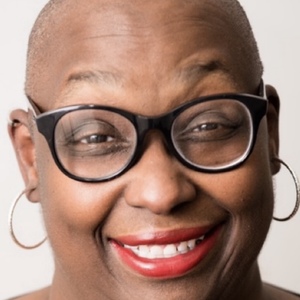
2. I am a Licensed Clinical Social Worker who specializes in helping clients overcome the loss of self, anxiety, and depression in a matter of months rather than years so that they can experience the present, increase acceptance and live with more purpose. My experience spans approximately fifteen years in the mental health field, I have a bachelor’s Degree from Portland State University (1999) and a Master’s Degree in Social Work from Arizona State University in 2005. I have worked in a variety of treatment settings, including inpatient psychiatric hospitals, level-one trauma centers, community crisis response, private practice, and in-home counseling. Having worked as a Clinical Social worker for 10+ years my training is rooted in systems theory which has taught me to evaluate the whole person, and to look at their individual needs, influences, and strengths which helps deliver personalized treatment for all of my clients. I have further training in Cognitive Behavioral Therapy, Solution Focused Brief Therapy, Acceptance and Commitment Therapy, and mindfulness techniques which have helped me specialize in anxiety and life transitions. Today I offers individual counseling for adults struggling with loss of identity, anxiety, agoraphobia, new medical/psychiatric diagnosis, depression, grief, co-occurring issues, stress management, and/or anyone who hopes to improve their ability to be present.

2. I am a Licensed Clinical Social Worker who specializes in helping clients overcome the loss of self, anxiety, and depression in a matter of months rather than years so that they can experience the present, increase acceptance and live with more purpose. My experience spans approximately fifteen years in the mental health field, I have a bachelor’s Degree from Portland State University (1999) and a Master’s Degree in Social Work from Arizona State University in 2005. I have worked in a variety of treatment settings, including inpatient psychiatric hospitals, level-one trauma centers, community crisis response, private practice, and in-home counseling. Having worked as a Clinical Social worker for 10+ years my training is rooted in systems theory which has taught me to evaluate the whole person, and to look at their individual needs, influences, and strengths which helps deliver personalized treatment for all of my clients. I have further training in Cognitive Behavioral Therapy, Solution Focused Brief Therapy, Acceptance and Commitment Therapy, and mindfulness techniques which have helped me specialize in anxiety and life transitions. Today I offers individual counseling for adults struggling with loss of identity, anxiety, agoraphobia, new medical/psychiatric diagnosis, depression, grief, co-occurring issues, stress management, and/or anyone who hopes to improve their ability to be present.