Virtual Counseling
Concerns
Therapist Gender
Counseling For
Price Range
Insurance Accepted
Payment Options
Client Focus - Age
Client Focus - Religion
Client Focus - Ethnicity
Language Spoken
Treatment Approach
Heather Wheeler
Associate Professional Counselor
Marietta, GA
It’s important work to step into counseling as an individual or with your loved ones. I admire those who make this commitment to growth and well-being. I’m honored to come alongside clients, providing therapeutic space to be honest without judgment. I’m passionate about giving clients autonomy, providing clarity, and being open to their feedback. I believe therapy is a collaborative process where both client and therapist play important roles: the client bringing their holistic self, and the therapist empathizing, tracing patterns, providing curiosity and insight, and working together toward meeting goals and living out personal values.
I enjoy working with couples, families, individual men, women, and teens! I have experience working in non-profit outpatient counseling centers and addiction treatment centers in addition to private practice. I especially enjoy helping families affected by addiction, working with couples longing to get unstuck and to experience lasting connection, and empowering teens with space to process and skills to manage stressors. I’m also passionate about supporting individuals through transitions across the lifespan, and through personal and spiritual identity work.
Specializations
No Information Available.
Essence Fiddemon
LPC
Atlanta , GA
Hello, I am a fully licensed LPC in Ga. I am trained in DBT, CBT and CPT. I help clients who live with depression, borderline personality disorder, anxiety and who struggle with relationships. I work with couples, parents and individuals.
I develop a positive and relational approach in therapy. I think it is important to be intentional in life. It starts with improving self-esteem and good self care. In therapy, you are in charge. We go at your speed. We will work towards your growth. Growth will be intentional during our time together. I have intense training in DBT, CBT, CPT (for trauma). I am also a DBT parenting coach.
Molly Halbrooks
LMFT
Charlotte, NC
Molly Halbrooks holds a Master of Family Therapy from Mercer University and has been licensed since 2014. Her extensive training and clinical experience have equipped her to work with adults of all ages with varying presenting issues through in person and virtual therapy. She currently is accepting clients from Georgia and North Carolina for virtual sessions, and in-person sessions for those in the Charlotte area.
In sessions, Molly creates a comfortable, safe, and accepting atmosphere where her clients can explore the challenges they face. Her clients have described her as down to earth, easy to talk to, and direct. The clients who find her to be the best fit include those facing life transitions such as divorce, new parenting, and career changes; individuals struggling with anxiety; grieving individuals; those facing relational struggles; and those who are wanting to make sense of and heal from past traumatic experiences. She uses a combination of techniques, drawing from Attachment Theory, Cognitive Behavioral Therapy, and client-centered, strength-based techniques to meet clients where they are and walk with them through the process of creating positive change. She has been trained in EMDR (Eye Movement Desensitization Reprocessing) and utilizes this to address a variety of presenting concerns, including trauma, mood disorders, and phobias.
Molly grew up just outside of Pittsburgh, Pennsylvania and has lived in the southeast for the past 14 years. She currently lives in the Charlotte area with her husband and children, and when she is not seeing clients she enjoys cooking, practicing yoga, spending time outdoors, and traveling.
Anxiety, Trauma, Women's Issues
Jenny Brooks
Psychologist
Atlanta, GA
I believe that creating a warm, safe, and respectful environment is pertinent to establishing a healthy therapeutic relationship with my clients and helping them to achieve their therapy goals. I strongly believe that therapy is a collaborative process between myself and my clients with the overarching goals of improving relationships, emotional regulation, self-understanding, adjustment, and life satisfaction.
I work with children, adolescents, and adult clients through the use of individual, couples, and family therapy. I frequently incorporate the use of the Brainspotting method to help clients of various ages process through a wide range of highly stressful, activating and traumatic experiences that prevent them from fully engaging in aspects of their life. I also have been trained in Collaborative Practice; information regarding this approach to divorce can be found at www.CollabAtlanta.com.
For my adult clients, therapeutic issues typically focus on depression, anxiety, interpersonal relationship concerns, self-esteem and self-worth, communication difficulties, marital/relationship discord, and life transitions. Therapy focuses on identifying a client’s own strengths and challenges, empowering him/her to cope more effectively with life’s struggles, and improving relationships and overall functioning through insight, self-awareness, and healthy decision-making skills and coping resources.
With my children (ages 5 and older) and adolescent clients, common issues include divorce, depression, anxiety, OCD, mood dysregulation, behavioral difficulties, ADHD, family conflict, school performance issues, and social difficulties, such as peer conflict, bullying, and poor social skills in general. I believe that an important component in working with children and adolescents is the inclusion of the family, as I believe that making changes within the family system is the foundation to therapeutic progress. Family therapy typically centers on improving family communication and relationships, assisting parents in coping with their child’s emotional or behavioral issues at home, and building healthy boundaries, expectations, and family roles.
In addition to therapy, I am experienced in conducting psychological and psychoeducational evaluations. Such evaluations are a tool for identifying a client’s cognitive and academic skills, assessing for learning disabilities and developmental delays, and obtaining information regarding a client’s mental health. Evaluations can yield a wealth of information to help with treatment and educational planning and the identification of appropriate interventions.
I received my Ph.D. in Counseling Psychology and my M.Ed. in School Counseling from The University of Georgia. Prior to earning my doctorate, I worked as an elementary school counselor. I have been in private practice in the Atlanta area since 2006. In addition to private practice, I have been an adjunct instructor at Georgia State University with the Department of Counseling and Psychological Services and served on the board of the Division of Women and Girls for the Georgia Psychological Association.
I look forward to meeting you and the opportunity to help you address the barriers or concerns that are interfering with your happiness and ability to live life to the fullest!
Anxiety, Relationships, ADHD
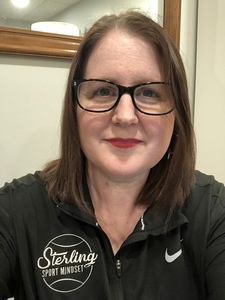
Linda Sterling
Kansas City, MO
Hello! I work with athletes on life & sport.
Kellie "Casey" Cook
Licensed Professional Counselor
Frisco, TX
Anxiety, Panic, Sleep issues
Doyle Hamilton
Roswell, GA
I am a minister and psychotherapist who values the healthy integration of faith along with the best of the behavioral sciences. I value spiritually grounded and psychologically informed care. One professional specialty has grief and loss.
grief and loss, marriage, family
Beatrice Krylowski
Cumming, GA
My philosophy is that every client that walks through my office door already possesses the answers to their problems. They just don’t know they do. I believe that counseling is a healing collaboration between counselor and client, where the client as the expert, and the counselor alongside the client, together evoke the emotional, psychological, and physical changes identified and desired by the client. I earned both my undergraduate degree in psychology(2008) as well as my master’s in professional counseling(2011) from Georgia State University. I began my career working mainly with survivors of trauma. I believe that trauma is a part of life and began noticing a strong correlation between trauma, anxiety, and emotional eating and weight gain. I work with weightloss in a unique way, by helping you get to the root of the issue. Whether its a childhood trauma or an unhealthy coping skill, together in collaboration with your body lets find the answer.
Hannah Rinehart
Norcross, GA
My desire is to come alongside you during life transitions, relationship issues and stressful times to provide a supportive and caring environment that assists you in dealing with life's difficulties. I work with women, adolescents and families struggling with anxiety, depression, addictions, faith-based issues, stress management, trauma, childhood sexual abuse, grief and relationship problems.
women's issues, anxiety, adolescents
Dianna Briggs
LCSW
I am a Licensed Clinical Social Worker with over seven years of experience working with children, teens, and parents. "Enter into children's play and you will find the place where their minds, hearts, and souls meet." -Virginia Axline. I specialize in Child-Centered Play Therapy, a developmentally appropriate treatment modality for children that utilizes their natural mode of communication, play. I also utilize Expressive Arts, Family Systems, Strength-Based, and CBT. I work primarily with children, teens, and young adults experiencing stress and anxiety, executive functioning deficits, identity confusion, mood disorders, grief and loss, and life adjustment challenges (i.e. separation/divorce). By providing a safe, non-judgmental environment, clients can effectively express, explore, and process their thoughts, feelings, and experiences. I believe every client is equipped with a unique set of strengths and skills that can help them overcome adversity. By helping clients rework negative perceptions of events in their lives or of themselves, clients can move to a more regulated state.
Children, Teens, Anxiety


.jpg)

-2.jpg)
.jpeg)